

Quick facts by PokerStrategy
- Full ring in poker is a table with nine or ten players.
- Full ring games have more positions and tighter ranges than shorthanded games.
- Stick to premium hands from early positions and widen your ranges and betting frequencies in late position.
What Does Full Ring Mean in Poker?
A full ring in poker refers to a table with the maximum number of players, usually nine or ten. This creates a tighter dynamic than a shorthanded table with only six seats or a heads-up game, as there are more players to get through from early position.
Table Size and Player Count in Full Ring Games
A full ring poker game typically has nine or ten players. An eight-max table could also qualify, although this is at the lower end of the range within the definition of full ring poker. Most live poker tables play full ring to save on the ratio of dealers and tables to players. They are also the most common form of poker table found in online poker rooms.
Full Ring vs Short-Handed Poker
A shorthanded poker game typically has only six players at the table, rather than nine or ten. The difference in table size and number of players between a full ring and shorthanded game changes the dynamics, particularly when it comes to full ring poker positions and the ranges one should play from them.
Here are the key differences between full ring and shorthanded poker games:
- Position – Full ring poker positions include more early and middle positions that are further away from the button.
- Ranges – Your full ring poker strategy requires tighter ranges from early and middle positions, as you’ll have more players to get through.
- Aggression – With looser ranges, shorthanded games are typically more aggressive with frequent stealing and bluffing, compared to the more conservative strategy in full ring poker.
- Pace – With more players to act during each hand, full ring poker games tend to have a slower pace. You’ll also typically play fewer hands due to the full ring game positions and tighter ranges.
No matter if you prefer full ring or shorthanded games, playing on the softest online poker sites gives you an edge by putting you at tables with weaker opponents.
Positional Dynamics in Full Ring
Full ring poker positions include the small blind, big blind, under-the-gun (UTG), UTG+1, middle position, lojack, hijack, cutoff, and the button. Take a look at the full ring poker positions here:
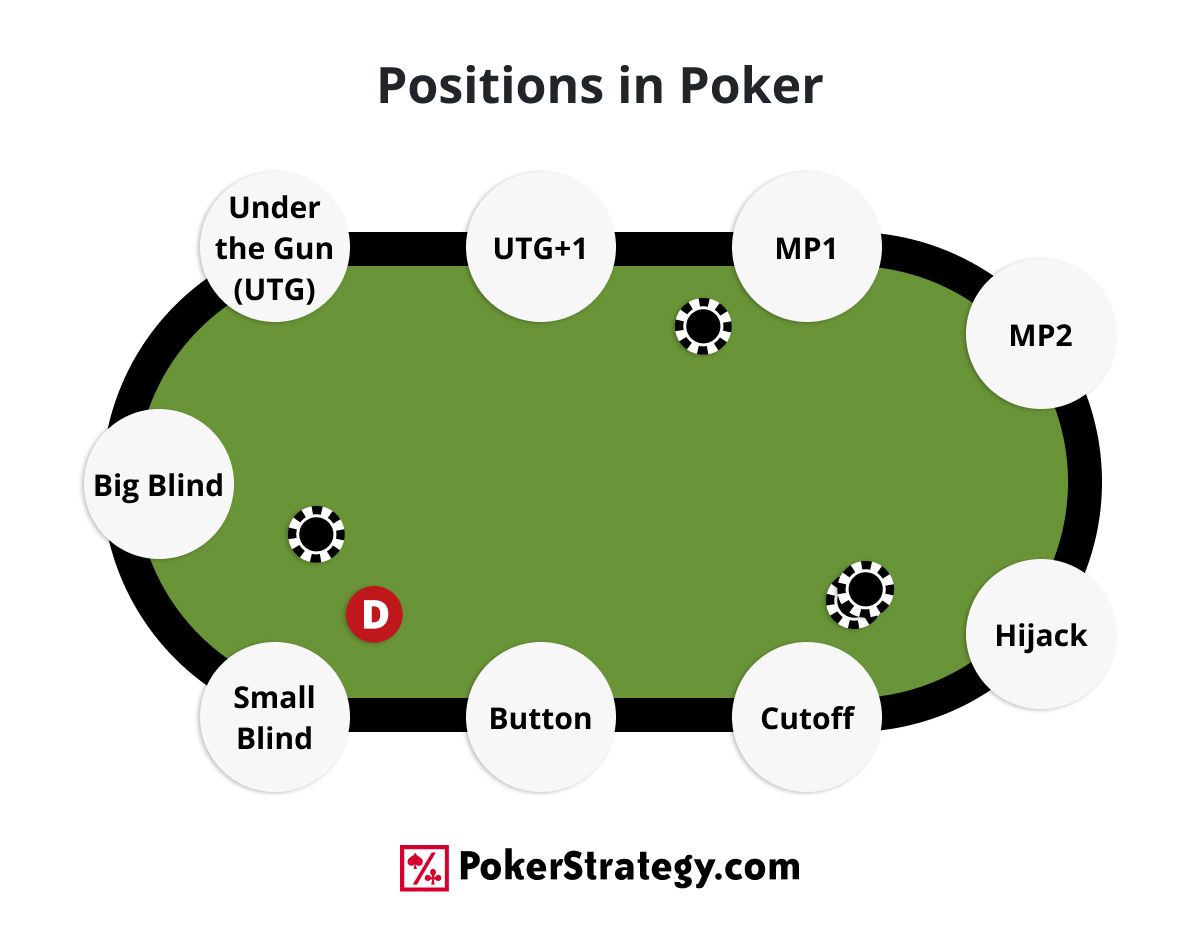
From early positions like UTG or UTG+1, you’ll still have a lot of players left to act behind you. Even when you are in the middle position, six opponents could wake up with a hand. This makes late position especially valuable, since you act last less often than in short-handed games.
Adjusting Pre-Flop Strategy for Full Ring
Your pre-flop full ring strategy revolves around keeping your ranges tight in early position. For example, from under the gun, you should only raise premium hands like mid to high pairs and broadways, along with a select few bluffs to balance your range.
As you move towards the middle position, you can loosen up slightly and start to introduce some medium-strength hands to your range.
When you are in a late position, particularly the cutoff and button, that’s when you can really loosen up and start to open-raise a wide range of hands. With deep stacks, you can open over 50 percent of hands from the button.
- Stick to tight ranges in the early position when playing full ring poker.
- Loosen up in mid to late position.
- Raise a wide range from the button and cutoff.
Competent players will be playing a similar style pre-flop, generally raising tight from early position and loosening up in late position. Therefore, your flat calling and 3-betting ranges should be wider against late position raises.
Post-Flop Strategy in Full Ring Games
Your post-flop strategy in full ring poker follows on from your positional pre-flop play. Here are some tips that specifically cover full ring strategy:
- Position – Position is also crucial post-flop, as you can see how your opponent acts to make better reads, control the size of the pot when needed, and make more effective value bets to get paid off.
- Continuation bets – C-bets are more effective when you have position, the board favours your range and/or you have some equity in the pot. Be selective with your c-betting.
- Respect aggression – If someone shows aggression on the flop and turn, particularly after raising from early position, they may have a very strong hand.
- Multiway pots – Multiway pots are more likely to occur in a full ring game. When three or more players are in the pot, you should bluff less often and stick mostly to a strong value range.
- Player reads – With nine or ten players at the table, full ring poker relies on having a solid read on your opponents, especially those to your direct left and right, who you will likely play the most pots against.
Common Mistakes in Full Ring Poker
Here are some common mistakes to look out for when playing full ring poker:
- Ignoring position or playing too many hands from early position.
- Overvaluing medium strength hands like one pair.
- Bluffing too often and in the wrong spots.
- Overplaying in multiway pots.
- Failing to adjust to table dynamics.
FAQs
How many players are at a full ring table?
There are typically nine or ten players at a full ring table. An eight-handed table may also qualify as being full ring.
How is full ring different from 6-max?
A full ring game has nine or ten players, whereas a six-max game only has six players. This changes the pace and dynamic of the game.
Is full ring better for beginners?
The pace of full ring games is a little slower and ranges are tighter, which some beginners may find easier to handle than the aggressive action of a shorthanded game.
Do professionals play full ring games?
Full ring games attract a mixture of players, including recreational and professionals.